
For schools across Africa, maintaining quality learning environments often comes down to a practical question: should damaged classroom furniture be repaired or completely replaced? When budgets are limited and student populations continue to grow, making the right decision can significantly affect both operational costs and classroom continuity.
Many schools automatically replace damaged student desks and chairs, assuming repairs will be too time-consuming or ineffective. However, the reality often depends on the condition of the school furniture and whether the student desks and chairs were designed with maintenance in mind.
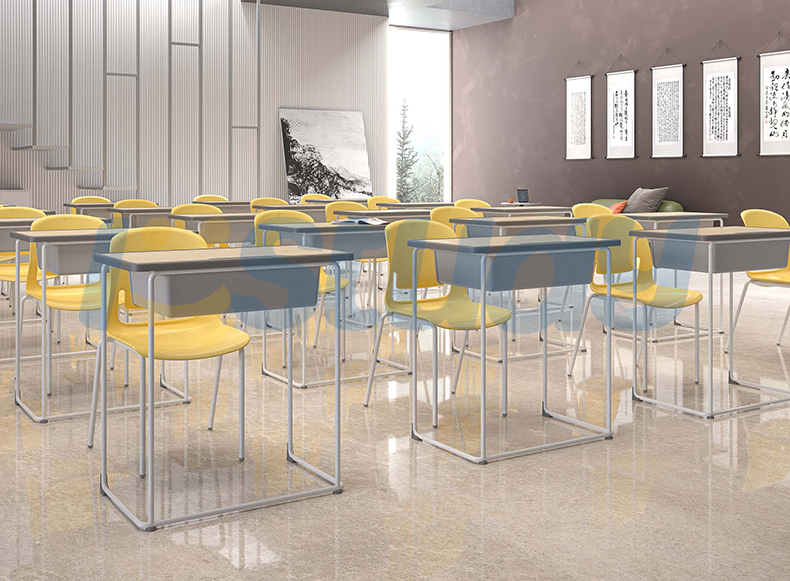
Repairing student desks and chairs is often the better option when:
l Only specific components are damaged
l Frames remain structurally sound
l Replacement parts are readily available
l Schools need to minimize classroom disruption
l Budget constraints make full replacement impractical
In these situations, repairing school furniture can extend product life while reducing procurement and transportation costs.
Replacement becomes a more practical solution when:
l Multiple structural components are damaged
l Classroom furniture no longer meets classroom requirements
l Repair costs approach replacement costs
l Safety and stability are compromised
l Outdated designs limit teaching flexibility
For many schools, the challenge is that traditional school furniture is not designed for easy maintenance. A damaged desktop, chair back, or leg of student desk and chairs may require replacing an entire unit simply because compatible parts are unavailable. This increases costs and creates unnecessary waste.
At Istudy, we address this challenge through modular classroom furniture design. Our student desks and chairs are developed with standardized components that make maintenance faster and more cost-effective. Instead of replacing an entire desk because of a damaged tabletop, schools can quickly swap the affected part and return the school furniture to service.
This modular approach is particularly valuable for education projects, growing schools, and high-usage classrooms. Standardized components simplify inventory management, reduce maintenance complexity, and allow schools to keep more classroom furniture operational with fewer resources. A replacement desktop, chair seat, or support component of student desks and chairs can often be installed in a short time without specialized tools or extensive repairs.
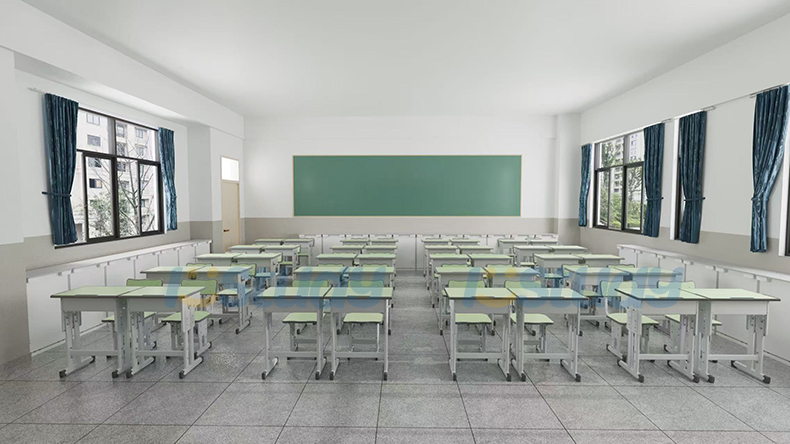
We also design our school furniture to adapt to different classroom environments. The modular configurations of student desks and chairs make the school easier for schools to accommodate changing enrollment numbers, classroom layouts, and teaching methods while maintaining consistency across campuses.
Beyond product design, we support customers with reliable inventory availability and professional project coordination. With readily available components and efficient supply support, schools can avoid long downtime periods waiting for replacement school furniture or parts.
The decision between repairing and replacing student desks and chairs should not be based solely on immediate costs. Classroom furniture designed for modular maintenance can significantly reduce long-term expenses while extending product lifespan. Through durable, adaptable, and easy-to-maintain school furniture, we help African schools maximize budgets, reduce disruption, and create better learning environments for students.